Snacking Like the Mediterranean: Olives, Nuts and the Anti-Vending-Machine
Quick Answer: Mediterranean snacking is single-ingredient food, mostly savory, assembled rather than unwrapped. The core rotation: olives, a small handful of almonds or walnuts (about 1 oz), seasonal fruit, and Greek yogurt. The 4pm version is a few olives and nuts with sparkling water — enough to bridge to dinner without turning into a sugar detour. Nothing here is exotic; it’s the grocery store perimeter.
The Mediterranean diet gets studied at dinner and completely forgotten at 4pm.
Which is strange, because the pattern absolutely has a snacking culture. It just looks nothing like a vending machine — no wrappers, no protein bars engineered to survive a nuclear event, no 200-calorie packs of things pretending to be food.
Olives. A handful of nuts. Fruit that’s in season. Maybe some cheese, and a walk. Here’s how it actually works, and why the savory bias matters more than any single ingredient.

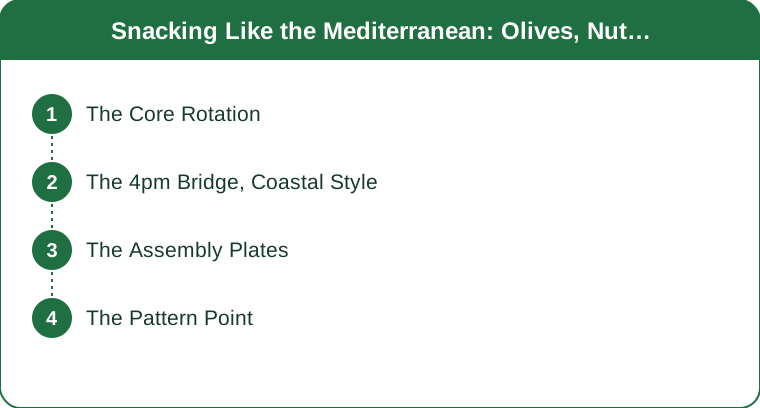
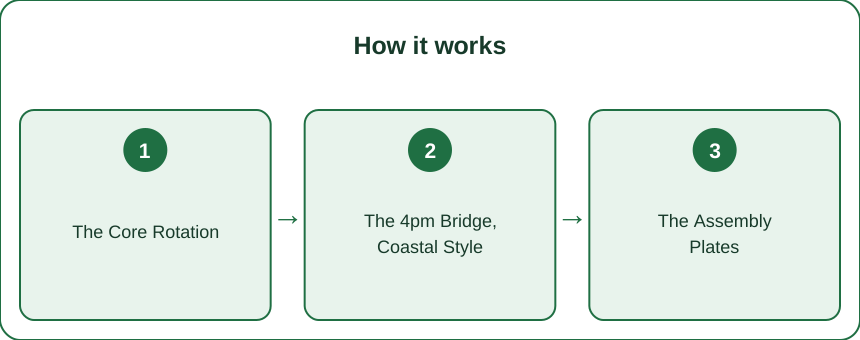
What Are the Core Mediterranean Snacks?
Four things, and the notable feature is that every single one is a single ingredient.
Olives. The original savory snack, and they come with built-in portion pacing — pits slow you down, and salt-and-fat satiety arrives faster than sugar satiety does. Roughly 10 olives is 50–60 calories of mostly monounsaturated fat.
Almonds and walnuts. The daily handful, with decades of cardiovascular data behind it. About 1 oz — 23 almonds or 14 walnut halves — which is worth measuring once so you know what it looks like in your hand, because nuts are extremely easy to eat by the fistful without noticing.
Seasonal fruit. The default dessert-snack across the entire region. Right now, late August: figs, peaches, melon, late tomatoes, the last of the grapes. Seasonal isn’t a virtue signal here — it’s just that in-season fruit tastes good enough to be dessert.
Greek yogurt, doing its usual overtime. Protein, satiety, and a vehicle for the fruit and nuts above.
Every item is single-ingredient, and that’s the pattern’s whole trick. Not a rule about macros or calories — just a consistent bias toward food that didn’t require a formulation team.
What Should You Eat at 4pm?
Small, savory, and social where possible.
The afternoon snack has a specific job: arrive at dinner civilized, not full. That’s a different target from “kill the hunger,” and it’s why the Mediterranean version is 100–200 calories rather than 400.
A few olives and a small handful of almonds with sparkling water covers the lunch-to-dinner canyon without triggering the sugar detour — the cookie at 4 that produces the crash at 5 that produces the second cookie at 5:15.
The savory bias is the underrated part. A sweet snack tends to open the appetite; a salty-fatty one tends to close it. That’s most of why “a few olives” works where “a granola bar” doesn’t, despite similar calorie counts.
The social element isn’t decoration either. Snacking standing at a counter with a phone in your other hand reliably produces less satisfaction per calorie than sitting down for four minutes. You don’t need a terrace and a view — you need to not be doing something else.

What Are the Easy Assembly Plates?
Thirty seconds, zero wrappers, disproportionate satisfaction.
- The mini mezze. Olives, sliced cucumber, a spoon of hummus, a torn piece of pita. Looks like an effort, takes less time than microwaving something.
- The fig-and-cheese moment. Fresh figs with a soft cheese, or with a hard salty one. In season right now and genuinely one of the best things available in August.
- Tomato with salt, eaten over the sink like a secret. No notes. A good August tomato with flaky salt is a complete snack and a small event.
- Yogurt with walnuts and honey. The 90-second version of dessert that doesn’t wreck dinner.
- Cucumber and feta with olive oil. Two ingredients, one plate, about 45 seconds.
Assembly beats packaging — the whole genre is arranging three things you already own rather than opening one thing you bought for this purpose.
What Nobody Tells You About Mediterranean Snacking
The olives in the shelf-stable jar aren’t the same product. Olives from the deli counter or a good jar in brine taste dramatically better than the canned sliced kind, and taste is the entire compliance mechanism here. This is worth the extra two dollars.
Nuts are calorie-dense and it’s fine, until it isn’t. A handful is a snack; the bag on the desk is a meal you didn’t notice eating. Portion into small containers once a week if the bag has a habit of emptying.
Salt is part of the pattern, not a violation of it. Olives, feta, and cured things are salty by nature, and the Mediterranean diet’s cardiovascular record includes all of them. If you’ve been told to limit sodium specifically, that’s a conversation with your doctor — but the default assumption that salty means bad doesn’t hold up here.
Nothing here is exotic. The Mediterranean snack aisle is your grocery store’s perimeter wearing sunlight. Produce, deli, dairy, and the bulk nuts. No specialty shop required.
The swap that matters is directional, not absolute. Single-ingredient snacks displacing engineered ones, most days. The vending machine survives as an occasional anecdote rather than a habit, and the pattern still works.
Mini FAQ
Are olives actually healthy?
Yes — they’re mostly monounsaturated fat, the same category as olive oil, plus polyphenols and vitamin E. They’re high in sodium by nature, which is worth knowing if you’re monitoring intake, and calorie-light enough that a normal serving is around 50–60 calories.
How many nuts should you eat a day?
About 1 oz, or a small cupped handful — roughly 23 almonds or 14 walnut halves. That’s the serving size used in most of the cardiovascular research, and it’s around 160–190 calories. More is fine if it fits your day; the point is knowing what one handful actually looks like.
Is Mediterranean snacking good for weight management?
It tends to help, mostly because savory single-ingredient foods are satiating per calorie and don’t produce the blood sugar swing that drives the next snack. It isn’t a weight loss protocol, though — portion still matters, particularly with nuts and cheese, which are the two easiest things here to overshoot.
TL;DR:
- The core rotation is olives, a 1 oz handful of nuts, seasonal fruit, and Greek yogurt — all single-ingredient.
- The 4pm snack should be small and savory; the job is arriving at dinner civilized, not full.
- Savory closes the appetite where sweet opens it — that’s why olives work and granola bars don’t.
- Assemble rather than unwrap: mini mezze, figs and cheese, tomato with salt, yogurt with walnuts.
- It’s all grocery-store perimeter food. The swap is directional — single-ingredient most days, not perfection.
Olives, handfuls, seasonal fruit, assembled plates. The Mediterranean pattern never paused between meals — it just snacked the way it ate: simply, savory, and suspiciously pleasant.
Keep Reading
This article is for general informational purposes only and is not medical advice. Always consult a qualified health professional for guidance specific to you.