Mediterranean Breakfast Ideas: How to Start Your Day the Blue-Zone Way
Quick Answer: A Mediterranean breakfast is savory rather than sweet, built on vegetables, protein, whole grains, and olive oil. The four easiest versions: Greek yogurt with fruit and nuts, eggs with vegetables (shakshuka-style), whole-grain toast with olive oil and tomato, or a savory plate of olives, cheese, cucumber, and tomato. Each takes 5–15 minutes and runs 350–500 calories with 15–25g of protein.
Here’s the thing nobody says out loud about American breakfast: it’s dessert. Cereal, pastries, flavored yogurt, sweetened oatmeal, a muffin the size of a fist. We eat cake at 7 a.m. and then wonder why we’re starving at 10.
A Mediterranean breakfast just isn’t structured that way. It’s savory, it has vegetables in it, and the fat comes from olive oil and nuts rather than butter and sugar. It’s also, importantly, not complicated.


What is a Mediterranean breakfast?
Four characteristics define it, and none of them require a recipe:
It’s savory. Tomatoes, cucumbers, olives, herbs, cheese, eggs. The sweet element, when it exists, is whole fruit or a spoonful of honey — not the base of the meal.
It’s vegetable-forward. Vegetables appear at breakfast, which sounds strange to an American ear and stops sounding strange after about four days.
Protein and fat carry the satiety. Greek yogurt, eggs, legumes, cheese, nuts, olive oil. This is why a Mediterranean breakfast holds you until lunch while a bowl of cereal doesn’t.
The carbs are whole and modest. Whole-grain bread, oats, occasionally legumes. Present, but not the main event.
The pattern is well studied — the Mediterranean diet as a whole has a substantial evidence base for cardiovascular health — and it also overlaps with how people eat in several Blue Zone regions, where breakfast tends to be small, savory, and unhurried.

8 Mediterranean breakfast ideas
1. Greek yogurt bowl (3 minutes). 1 cup plain full-fat or 2% Greek yogurt, a handful of berries, a tablespoon of chopped walnuts, a drizzle of honey. Roughly 20g protein. Plain yogurt plus real fruit, not the pre-sweetened kind — the flavored tubs often carry as much sugar as a dessert.
2. Shakshuka or eggs with vegetables (15 minutes). Eggs poached in a simple tomato, pepper, and onion sauce with cumin and paprika. Make the sauce Sunday, reheat and crack eggs into it on a weekday for a 5-minute version.
3. Tomato toast with olive oil (5 minutes). Whole-grain bread, a good extra virgin olive oil, grated or sliced ripe tomato, sea salt. The Spanish pan con tomate. Add avocado, feta, or a soft-boiled egg to make it a real meal.
4. The savory mezze plate (5 minutes, no cooking). Olives, feta or another sheep’s-milk cheese, cucumber, tomato, a boiled egg, a slice of bread, olive oil. This is a genuine everyday breakfast across Greece and Turkey and it requires exactly zero skill.
5. Oats with Mediterranean toppings (5 minutes). Rolled oats with chopped nuts, figs or dates, and a spoon of yogurt. Overnight oats work fine here.
6. White beans on toast (7 minutes). Cannellini beans warmed with olive oil, garlic, and lemon, piled on whole-grain toast. Roughly 18g protein and around 10g fiber, and cheaper than almost anything else on this list.
7. Labneh or thick yogurt with za’atar (3 minutes). Thick strained yogurt, a pool of olive oil, a heavy sprinkle of za’atar, bread for scooping. The best five-ingredient breakfast in existence.
8. Leftover vegetables with an egg (8 minutes). Roasted vegetables from last night’s dinner, reheated with a fried egg on top. The most Mediterranean thing about Mediterranean eating is that leftovers are breakfast.
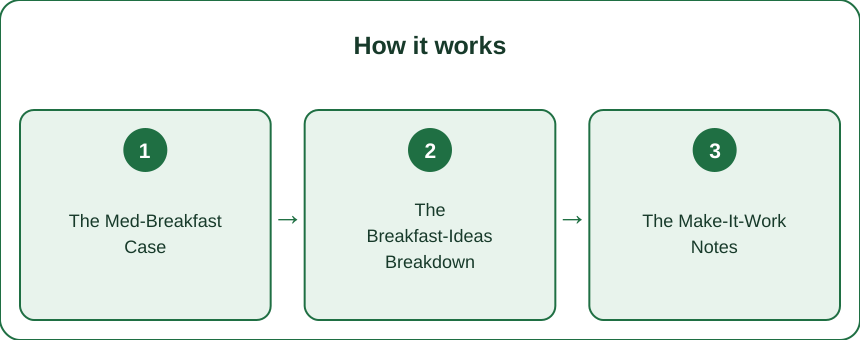
What nobody tells you about switching your breakfast
Savory in the morning feels wrong for about a week. Your palate has an expectation, not a preference. It resets faster than you’d think — usually 5 to 7 days.
The 10 a.m. crash disappears first. This is the change people notice before anything else. Protein and fat at breakfast flatten the blood-sugar curve that a carb-heavy breakfast produces.
Good olive oil matters more at breakfast than at dinner. At dinner it gets cooked and buried under other flavors. On toast at 7 a.m. it’s the whole flavor, and the difference between a supermarket blend and a decent single-origin extra virgin is obvious.
Buying pre-sweetened “Mediterranean-style” yogurt undoes most of the point. Check the label — plain yogurt should have around 4–6g of sugar per serving from lactose alone. Twenty grams means someone added it.
Prep is 15 minutes, once. Boil six eggs, wash and cut cucumbers and tomatoes, make a jar of tomato sauce. That’s Sunday. The rest of the week is assembly, and assembly is what makes this survive a real schedule.
Making it work on a weekday
Stock five staples and you’re done: Greek yogurt, eggs, good extra virgin olive oil, a firm cheese like feta, and whatever vegetables are in season. Add nuts, olives, and whole-grain bread and you can build every idea above.
Have a 3-minute default. For most people that’s the yogurt bowl or the mezze plate. On a chaotic Tuesday, you don’t want to be making decisions.
Cook once for three mornings. Shakshuka sauce, a batch of beans, a tray of roasted vegetables — each covers several breakfasts.
Rotate savory and yogurt days. Boredom kills more dietary changes than difficulty does.
Don’t treat it as a rule set. Breakfast is one meal inside a broader pattern. The Mediterranean pattern is defined more by what’s on the plate across a week — vegetables, legumes, fish, olive oil, whole grains — than by nailing any single morning.
A note on individual needs
This is general information, not personalized nutrition advice. If you manage diabetes, kidney disease, high cholesterol, or a specific medical condition, or you’re pregnant, the right breakfast for you may differ — a registered dietitian or your clinician can adjust the specifics. Anyone with nut, dairy, egg, or gluten sensitivities will need substitutions, and most of these ideas swap cleanly.
FAQ
What do Mediterranean people actually eat for breakfast?
It varies by country, and it’s usually small. Greece and Turkey lean toward a savory plate of olives, cheese, cucumber, tomato, and bread. Italy is famously light — espresso with a small pastry. Spain often has tomato toast with olive oil. The common thread is modest portions and not much added sugar.
Is oatmeal Mediterranean?
Oats aren’t traditional to the region, but whole grains certainly are, and oats fit the pattern well when you top them the Mediterranean way — nuts, seeds, whole fruit, a spoon of yogurt — rather than with brown sugar and syrup.
Can you lose weight on a Mediterranean breakfast?
Weight change depends on overall calorie intake, not any single meal. What a protein- and fiber-forward breakfast does reliably is improve satiety, which tends to reduce mid-morning snacking. That helps, but it works because of the total pattern, not because of the breakfast alone.
TL;DR:
- Mediterranean breakfast = savory, vegetable-forward, protein and olive oil carrying the satiety.
- Four easy defaults: Greek yogurt bowl, eggs with vegetables, tomato toast with olive oil, savory mezze plate.
- Most take 3–15 minutes and land at 350–500 calories with 15–25g protein.
- Stock five staples: Greek yogurt, eggs, good olive oil, feta, seasonal vegetables.
- Plain yogurt, not flavored — the sweetened tubs undo most of the benefit.
- The savory-in-the-morning adjustment takes about a week, and the 10 a.m. crash goes first.
Keep Reading
This article is for general informational purposes only and is not medical advice. Always consult a qualified health professional for guidance specific to you.