Why the Mediterranean Diet Doesn't Produce the Same Results for Everyone Who Tries It
Quick Answer: The Mediterranean diet’s research base is strongest for cardiovascular and longevity outcomes measured over years, not for short-term weight loss, which means two people following it identically can see very different results depending on which outcome (heart health markers vs. the number on the scale) they’re actually measuring against, and over what timeframe.
Two people follow the same Mediterranean diet principles closely for months. One sees meaningful changes; the other feels like nothing happened. The diet itself isn’t inconsistent — what each person is measuring, and over what timeframe, usually is.

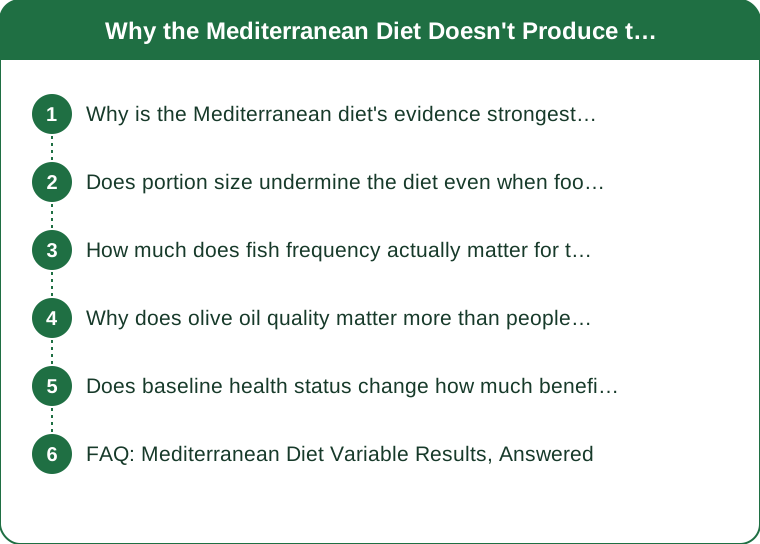
Why is the Mediterranean diet’s evidence strongest for heart health specifically, not weight loss?
The largest and longest studies on the Mediterranean diet, including the well-known PREDIMED trial, were designed and measured around cardiovascular event reduction — heart attacks, strokes, cardiovascular mortality — not primarily weight change. Someone expecting dramatic scale movement is measuring against an outcome the diet’s strongest evidence was never built to optimize for.
Does portion size undermine the diet even when food choices are exactly right?
Yes, and this is one of the most common gaps — olive oil, nuts, and whole grains are all core Mediterranean diet components, but they’re also calorie-dense. Eating them in the generous, traditional portions of the diet’s origin regions without adjusting for a more sedentary lifestyle or higher baseline calorie needs can offset weight-loss goals even while eating ‘correctly’ by the diet’s food list.
How much does fish frequency actually matter for the differences people see?
More than casual adoption often accounts for — the diet’s cardiovascular benefits are tied partly to regular omega-3 intake from fish 2-3 times weekly, and someone following a ‘Mediterranean-style’ diet without fish (common among people who simply don’t like fish) may see meaningfully different heart-health-marker outcomes than someone eating the full traditional pattern.

Why does olive oil quality matter more than people assume?
Extra virgin olive oil retains significantly more polyphenols (compounds linked to the diet’s anti-inflammatory benefits) than refined or lower-grade olive oil, which loses much of that compound content during processing. Two people both ‘using olive oil’ can be getting meaningfully different benefit levels depending on the grade and freshness of what’s actually in their kitchen.
Does baseline health status change how much benefit someone sees?
Yes — much of the strongest evidence for cardiovascular benefit comes from populations with existing risk factors or prior cardiovascular events, where the diet has more room to measurably improve outcomes. Someone starting from an already low-risk baseline may see smaller measurable changes simply because there was less room to improve on paper, even while still benefiting.
FAQ: Mediterranean Diet Variable Results, Answered
Is the Mediterranean diet still worth following if weight loss is the main goal?
It can support weight loss within a calorie-appropriate framework, but portion awareness matters more than with lower-calorie-density diets, since core components like olive oil and nuts are calorie-dense.
How long before Mediterranean diet cardiovascular benefits typically show up in bloodwork?
Some markers (like triglycerides) can shift within weeks, while broader cardiovascular risk reduction is measured over years in the underlying research, not weeks or months.
Does not eating fish rule out getting real benefit from the diet?
No — plant-based omega-3 sources like walnuts and flaxseed provide partial benefit, though generally not identical to the specific fatty acid profile fish provides.
TL;DR:
- The diet’s strongest evidence measures cardiovascular outcomes over years, not short-term weight loss
- Calorie-dense core foods (olive oil, nuts) can offset weight goals even when ‘eaten correctly’ by the food list
- Fish frequency and olive oil quality both meaningfully affect how much cardiovascular benefit shows up
- Baseline health status changes how much measurable improvement is even possible to detect
Before judging results against someone else’s experience, check whether you’re both actually measuring the same outcome over the same timeframe.
Keep Reading
This article is for general informational purposes only and is not medical advice. Always consult a qualified health professional for guidance specific to you.