Why Mediterranean Diet Changes Show Up in Your Energy Weeks Before the Scale Moves
Quick Answer: The Mediterranean pattern changes energy, digestion, and satiety within 1-3 weeks - well before body weight responds. It is not primarily a calorie-restriction diet, so early changes show up in stable blood sugar, better afternoon energy, and reduced appetite volatility instead of on the scale. Weight change, when it happens, typically shows around weeks 6-12 and is gradual.
Which means judging it at three weeks by weight alone is measuring the wrong thing at the wrong time.
That mismatch is the single most common reason people quit a pattern that was actually working.

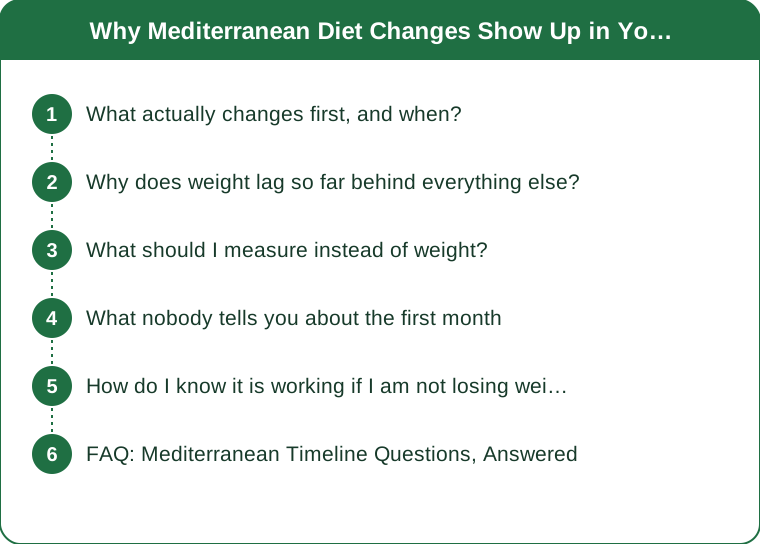
What actually changes first, and when?
A rough timeline based on how the pattern works metabolically:
Days 3-7: digestion shifts. Fiber intake usually jumps substantially - beans, vegetables, whole grains - and the gut takes about a week to adjust. Some bloating in this window is normal and temporary, not a sign the diet does not suit you.
Weeks 1-3: afternoon energy stabilizes. Meals built around fiber, protein, and olive oil produce a slower glucose curve, and the 3 p.m. crash flattens. This is the change people notice and dismiss.
Weeks 2-4: appetite volatility drops. Fewer sharp cravings, longer gaps between wanting to eat.
Weeks 6-12: body composition, if it is going to move. Typically 0.5-1 lb per week at most, without deliberate restriction.
Months 3-6: blood lipid markers. This is the timeframe most clinical studies use, and it is why your annual physical is the honest checkpoint.
Why does weight lag so far behind everything else?
Because the Mediterranean pattern was never designed as a weight-loss protocol - it is an eating pattern that happens to support healthy weight.
It is calorie-dense. Olive oil is 120 calories per tablespoon and nuts are calorie-heavy by design. You can eat a textbook-perfect Mediterranean day and land at maintenance calories or above. That is not failure; it is what the pattern is.
Fiber and water retention muddy the early signal. Increasing fiber intake by 15-20 g a day shifts water and gut content enough to mask real change for two to three weeks.
Muscle changes if you are also training. Weight is a poor instrument when two things are moving in opposite directions.
The practical translation: if weight is your goal, portion the olive oil and the nuts deliberately - a tablespoon measured, a small handful counted. The rest of the pattern needs no restriction.
What should I measure instead of weight?
Four things, all free, all more responsive than the scale.
- Afternoon energy, 1-10, at 3 p.m. daily. The most sensitive early indicator. A one-point average improvement over two weeks is a real signal.
- Time between meals. Track when you first feel genuinely hungry after lunch. Extending from two hours to four is a meaningful metabolic change.
- Waist circumference, monthly. Measured at the navel, first thing in the morning. It moves when the scale does not, because it tracks visceral fat specifically.
- Sleep quality. Anecdotally the most common unprompted report from people three weeks in.
Write the 3 p.m. number in your phone’s notes app for two weeks. It takes four seconds a day and it will tell you whether the pattern is doing something long before the scale is willing to.

What nobody tells you about the first month
Four things that surprise almost everyone.
The bloating is real and it passes. Gut bacteria need roughly 2-4 weeks to adapt to a large fiber increase. Ramp up over two weeks instead of switching overnight and most of it never happens.
You will be hungrier at first, then less hungry than before. Replacing refined carbohydrate with fiber and fat changes satiety signaling, but the adjustment takes about ten days. Week one is the worst week, and people quit in week one.
The cost curve is front-loaded. Olive oil, nuts, and pantry staples are an expensive first shop and a cheap fourth shop. Judging affordability from your first receipt is misleading.
Late summer is genuinely the easiest time to start. Tomatoes, peppers, eggplant, zucchini, and stone fruit are at peak and cheapest right now. Starting in August means the pattern tastes good before the discipline is tested by February produce.
How do I know it is working if I am not losing weight?
Run a two-week honest check against these markers:
Working, keep going: afternoon energy up, fewer cravings, digestion settled after the first two weeks, sleeping better, waist measurement stable or down even if weight is not.
Working but needs portion attention: everything above is true and weight is climbing. Measure the oil and count the nuts - those two alone account for most unintended surplus. Nothing else needs changing.
Not working yet, adjust: energy unchanged after three weeks, still crashing hard at 3 p.m. Most often this means protein is too low - the pattern is easy to execute as bread, oil, and vegetables with almost no protein. Aim for a palm-sized protein portion at two meals.
Genuinely check with a professional: persistent digestive pain, ongoing fatigue, or any concerning symptom past a month. This is general information, not medical advice - if something feels wrong rather than merely slow, that warrants a conversation with your doctor, especially if you take medication that interacts with dietary change.
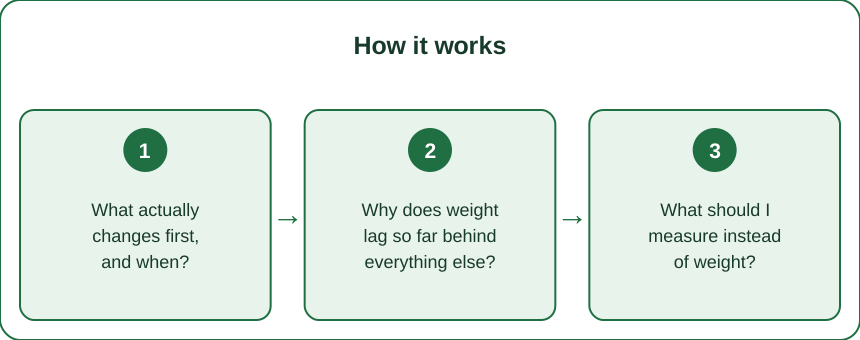
FAQ: Mediterranean Timeline Questions, Answered
How long before I should judge whether it suits me?
Six weeks minimum, twelve for a fair verdict on weight. Anything shorter measures water and adaptation, not the pattern.
Can I speed it up?
You can make the energy changes arrive faster by getting protein adequate from day one and ramping fiber gradually. You cannot meaningfully speed up the weight timeline without adding deliberate portion control, which is a separate decision.
Do I have to be perfect?
No - and the research base is built on population patterns, not perfect adherence. Consistency at 80% beats perfection for three weeks followed by quitting, which is the actual alternative most people are choosing between.
TL;DR:
- Energy, digestion, and appetite change in 1-3 weeks. Weight moves at 6-12 weeks, slowly.
- The pattern is calorie-dense by design - measure the olive oil and count the nuts if weight is the goal.
- Track 3 p.m. energy and monthly waist measurement instead of daily weight.
- Ramp fiber over two weeks to avoid the first-week bloating that makes people quit.
- Low protein is the most common reason energy does not improve. Palm-sized portion, two meals.
Starting now, in peak tomato and stone-fruit season, is about the friendliest on-ramp the calendar offers. Give it six weeks and measure the right things.
Keep Reading
This article is for general informational purposes only and is not medical advice. Always consult a qualified health professional for guidance specific to you.