What a Mediterranean Week Costs When You Actually Track It
Quick Answer: A Mediterranean pattern typically costs less than a standard American grocery week, not more, because its base is legumes, grains, seasonal vegetables, and canned fish — all inexpensive. The cost impression comes from the optional top layer: fresh fish, imported cheese, nuts, and premium olive oil. Build from the base and treat the top layer as occasional and the week comes in under budget.
The perception is that eating this way requires a specialty store, a fish counter, and a bottle of oil that costs as much as dinner.
That perception comes almost entirely from the photographs.
When you look at what actually goes in the cart across a full week, the money concentrates in three categories — and two of them are optional.

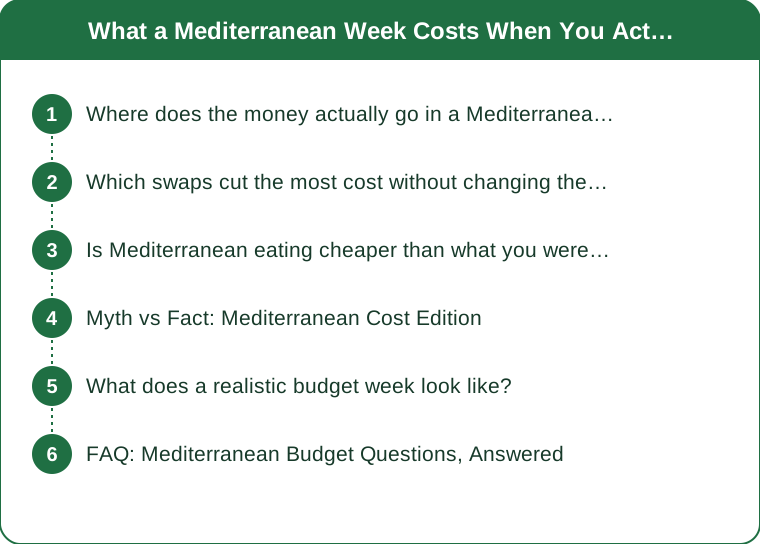
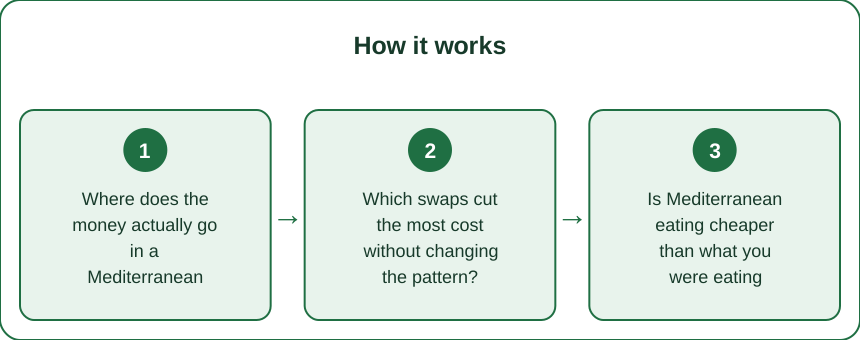
Where does the money actually go in a Mediterranean week?
Roughly in this order, and the shape is consistent:
The inexpensive base — about 40 percent of the week’s food, around 15 to 20 percent of the cost. Dried or canned legumes, bulk grains, onions, garlic, canned tomatoes, seasonal vegetables. Lentils remain one of the cheapest sources of protein available anywhere in the store.
The mid tier — about 35 percent of cost. Eggs, yogurt, seasonal fruit, canned fish, poultry. Normal grocery prices, nothing unusual.
The top layer — the remaining 45 percent, and where the reputation comes from. Fresh fish, aged cheese, nuts, and good olive oil.
That last category is where people’s mental image of the diet lives, and it is the only part that is genuinely optional in the short term. A week built on the first two tiers is legitimately Mediterranean — that is what most of the actual Mediterranean coast has historically eaten. The fish-and-cheese version is closer to the restaurant interpretation.
Which swaps cut the most cost without changing the pattern?
Four substitutions that preserve the nutritional shape and remove most of the expense:
- Canned sardines, mackerel, or salmon instead of fresh fish. Same omega-3 profile, often better, at roughly a quarter of the price. Sardines are among the least expensive nutrient-dense foods in the store and remain deeply traditional in the region.
- Dried legumes instead of canned. About one third the cost. A pound of dried chickpeas yields what four cans would. Soak overnight or use a pressure cooker for 35 minutes.
- Frozen vegetables for anything cooked. Frozen spinach, peas, green beans, and artichokes are frozen at peak and cost far less than fresh. Save fresh for anything eaten raw, where texture matters.
- A mid-tier bulk olive oil for cooking, a good one for finishing. This is the swap that saves the most money for the least sacrifice. Heat degrades the delicate compounds you pay a premium for, so cooking with expensive oil is spending money on something the pan destroys.
Those four alone typically cut a Mediterranean grocery bill by 30 to 40 percent while leaving the actual eating pattern intact.
Is Mediterranean eating cheaper than what you were eating before?
For most American households, yes — and the reason is the protein line.
The largest single expense in a typical American grocery week is meat, particularly beef. The Mediterranean pattern shifts most of the protein load to legumes, eggs, and canned fish, which cost a fraction as much. That shift alone frequently offsets everything else.
The place it does get more expensive is produce volume. You will buy considerably more vegetables than a standard week. That number is smaller than people expect when you buy seasonal and use frozen for cooked applications, but it is real.
Two counterweights worth naming:
- Food waste drops. This pattern is built for using things up — stale bread becomes panzanella, wilting vegetables become soup, bean liquid thickens sauces. The average household throws away roughly a third of what it buys, and this cuisine is structurally good at not doing that.
- Convenience spending drops. The largest hidden grocery expense for most people is prepared and packaged food, which barely exists in this pattern.
Early August is genuinely the cheapest moment of the year for this way of eating. Tomatoes, zucchini, peppers, eggplant, and stone fruit are all at their seasonal price floor right now, and they are the exact vegetables the cuisine is built on.

Myth vs Fact: Mediterranean Cost Edition
Myth: You need expensive extra virgin olive oil for everything. Fact: Use a mid-priced oil for cooking and a good one for raw finishing. Heat destroys the polyphenols that justify the premium, so cooking with the expensive bottle is literally burning money.
Myth: The diet requires fresh fish twice a week. Fact: Canned oily fish delivers the same omega-3s more cheaply and has been a Mediterranean staple for centuries. Sardines on toast is not a budget compromise — it is the actual food.
Myth: Imported ingredients are necessary. Fact: The pattern is defined by proportions — mostly plants, olive oil as the primary fat, fish over red meat, legumes daily — not by country of origin. Local beans and local greens qualify entirely.
Myth: It takes more time, which is its own cost. Fact: The core dishes are among the simplest in any cuisine. A pot of beans with olive oil, greens, and bread is 20 minutes of attention. The elaborate versions are restaurant food, not household food.
Myth: Nuts are essential daily. Fact: They are beneficial and they are the priciest item per calorie in the whole pattern. A small portion a few times a week captures most of the benefit at a fraction of the cost, and buying them in bulk rather than pre-portioned cuts that further.
What does a realistic budget week look like?
A workable shopping list that covers seven days for two people without specialty stores:
Pantry base: dried lentils, dried chickpeas, canned tomatoes, bulk oats or farro, canned sardines, canned tuna, olive oil (cooking grade), garlic, onions.
Fresh: whatever vegetables are at seasonal peak — right now that is tomatoes, zucchini, peppers, eggplant, and greens — plus lemons, seasonal fruit, and a bunch of herbs.
Dairy and eggs: plain yogurt, eggs, one hard cheese to grate. A block of parmesan-style cheese used as seasoning rather than a main ingredient goes remarkably far.
Frozen: spinach, peas, and one bag of frozen fish fillets.
Meals that come from that list: lentil soup, chickpeas with greens and lemon, sardines on toast with tomato, shakshuka, a large grain salad that lasts three days, roasted vegetables over yogurt, and pasta with whatever vegetable is best that week.
The organizing principle: build the week from the pantry outward. Decide the legume and grain first, then buy whatever vegetables look best and are cheapest, then adjust the recipe to fit. That order is how the cuisine actually developed, and it is also how you keep the bill down.
This is general information, not medical or financial advice.
FAQ: Mediterranean Budget Questions, Answered
Is a cheap olive oil still worth using?
For cooking, yes. Look for a harvest date within the last 18 months and a dark bottle — freshness matters more than price on cooking oil. For raw finishing, spend more, because that is where you actually taste the difference.
Are canned beans acceptable if I will not soak dried ones?
Absolutely. Canned beans are still inexpensive, and a rinsed can costs less than nearly any equivalent protein. Dried is cheaper still, but a pattern you actually follow beats an optimization you abandon.
What is the single biggest cost driver to watch?
Fresh fish and nuts, in that order. If your Mediterranean grocery bill feels high, check those two lines first — they are usually most of the gap.
TL;DR:
- The base of this pattern — legumes, grains, seasonal vegetables — is among the cheapest food in the store.
- Canned oily fish, dried legumes, frozen vegetables, and split-tier olive oil cut 30–40 percent off the bill.
- Shifting protein away from beef usually makes the week cheaper than what you were eating before.
- August is the seasonal price floor for exactly the vegetables this cuisine is built on.
- Build from pantry outward: legume and grain first, then whatever produce is cheapest that week.
The expensive version of this diet is a restaurant interpretation of it. The household version — beans, greens, bread, oil, whatever is in season — is what most of the region actually ate, and it was cheap on purpose.
Keep Reading
This article is for general informational purposes only and is not medical advice. Always consult a qualified health professional for guidance specific to you.