The Mediterranean Diet for Active People: What Actually Needs to Change?
Quick Answer: The Mediterranean diet’s core structure — vegetables, whole grains, olive oil, fish, legumes — holds up well for active people, but its traditional protein and carbohydrate levels often run lower than what regular training demands, meaning most active people need to deliberately add more protein and time carbohydrates around workouts rather than following the classic ratio as-is.
The Mediterranean diet’s reputation for health is well-earned — its reputation for supporting serious training volume needs a few practical adjustments first.

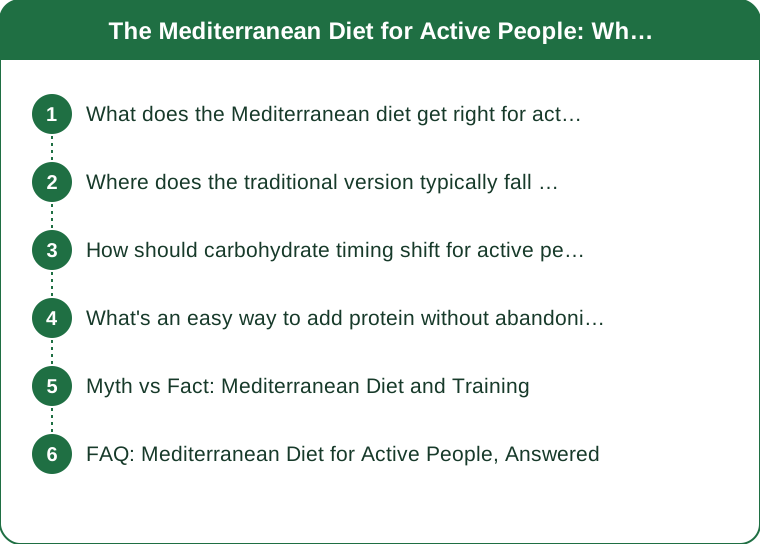
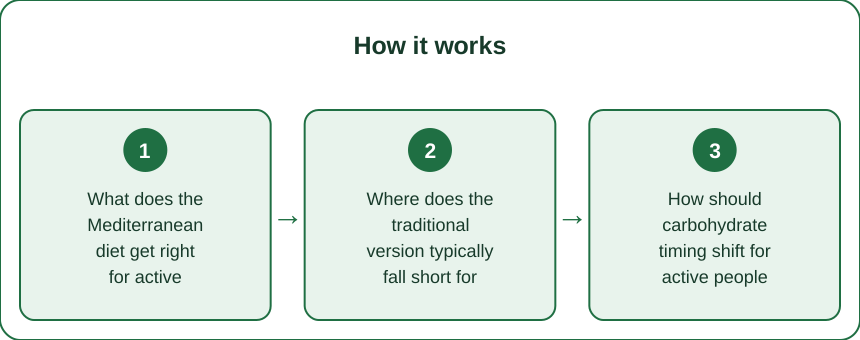
What does the Mediterranean diet get right for active people?
The emphasis on whole foods, healthy fats (olive oil, nuts, fish), and minimally processed carbohydrates provides a genuinely strong nutritional foundation — good micronutrient density, healthy fat sources supporting hormone production, and anti-inflammatory properties that support recovery.
Where does the traditional version typically fall short for active people?
Protein intake in the traditional Mediterranean pattern often lands lower than what regular strength or endurance training demands — frequently in the range that supports general health but under the 1.2-1.6g/kg range more active people benefit from. This is the most common gap to address.
How should carbohydrate timing shift for active people following this diet?
The traditional pattern doesn’t specifically emphasize timing carbohydrates around training, which matters more for active people than for a sedentary population. Shifting a larger share of daily carbs (whole grains, fruit) to before and after workouts improves both performance and recovery without changing overall diet philosophy.

What’s an easy way to add protein without abandoning the diet’s core structure?
Increasing fish, legume, and Greek yogurt portions — all already part of the traditional pattern — closes much of the protein gap without introducing foods outside the diet’s framework. Adding a source at breakfast specifically (an area many versions of this diet underemphasize) helps most.
Myth vs Fact: Mediterranean Diet and Training
Myth: The Mediterranean diet is inherently too low-protein for any serious training. Fact: With deliberate portion adjustments to existing foods, it can meet higher protein needs while keeping its core structure intact.
Myth: Olive oil and nuts should be limited for active people trying to manage calories. Fact: These healthy fats support hormone production and recovery — the issue is usually under-eating protein, not over-eating healthy fats.
Myth: You need to add processed protein powders to make this diet work for training. Fact: Whole-food sources within the diet (fish, legumes, yogurt, eggs) can meet most active people’s higher protein needs directly.
FAQ: Mediterranean Diet for Active People, Answered
Do I need to add protein powder to a Mediterranean-style diet for training?
Not necessarily — whole food sources within the diet can meet most needs, though a shake can be a convenient addition around intense training blocks.
Does this diet provide enough carbohydrate for endurance training specifically?
With intentional emphasis on whole grains and fruit around training sessions, yes — the base structure just needs that timing adjustment.
Is this diet appropriate for muscle-building goals, not just general health?
Yes, with the protein and calorie adjustments discussed above — the core food quality supports muscle-building goals well.
TL;DR:
- The Mediterranean diet’s whole-food foundation genuinely supports active lifestyles well
- Traditional protein levels often run lower than active training demands
- Shifting carbs to around workouts improves performance without changing diet philosophy
- Fish, legumes, and yogurt portions can close the protein gap using existing diet foods
The Mediterranean diet doesn’t need an overhaul for active people — just a few deliberate portion and timing adjustments to its existing foundation.
Keep Reading
This article is for general informational purposes only and is not medical advice. Always consult a qualified health professional for guidance specific to you.