How Often Should You Actually Eat Fish on a Mediterranean Diet?
Quick Answer: Most Mediterranean diet guidelines recommend fish and seafood at least twice a week, prioritizing fatty fish like salmon, sardines, or mackerel for their omega-3 content, rather than daily fish consumption which isn’t actually part of traditional patterns.

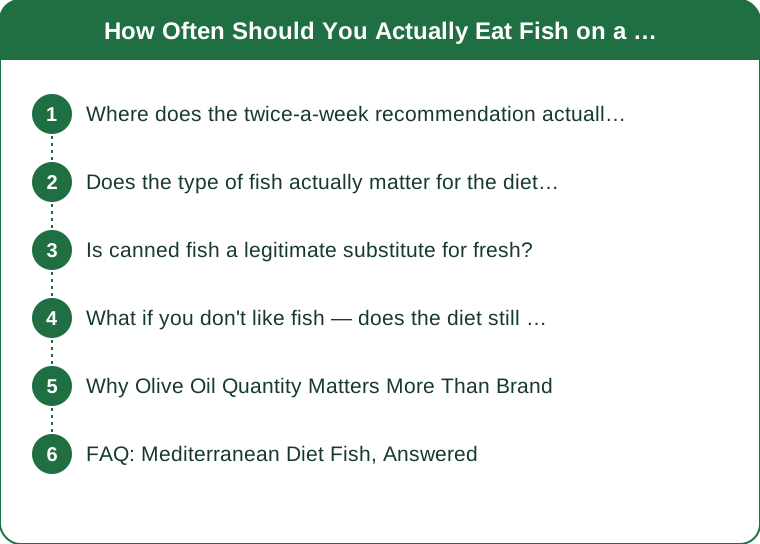
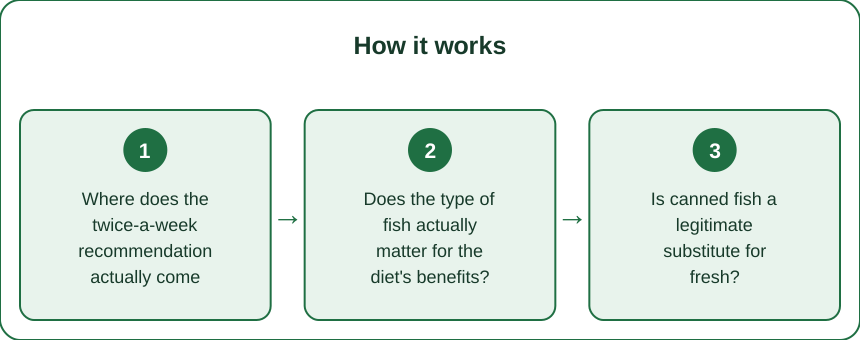
Where does the twice-a-week recommendation actually come from?
This figure is based on observational research from Mediterranean populations with lower cardiovascular disease rates, where fish appeared regularly but not daily — poultry, legumes, and plant proteins filled most other meals. Two servings of fatty fish per week is enough to meaningfully raise omega-3 intake without needing to overhaul your entire diet around seafood.
Does the type of fish actually matter for the diet’s benefits?
Yes, significantly — fatty fish like salmon, sardines, mackerel, and anchovies contain far more omega-3 fatty acids than lean white fish like tilapia or cod. Both are healthy protein sources, but if you’re specifically targeting the cardiovascular benefits associated with the Mediterranean pattern, fatty fish delivers more of what the research is actually measuring.
Is canned fish a legitimate substitute for fresh?
Yes, canned sardines, mackerel, and salmon retain most of their omega-3 content and are actually one of the most practical ways to hit a twice-weekly target without the cost or spoilage concerns of fresh fish. Look for versions packed in olive oil or water rather than heavily processed sauces.

What if you don’t like fish — does the diet still work without it?
The diet’s benefits come from the overall pattern, not any single food, so plant-based omega-3 sources like walnuts, flaxseed, and chia seeds can partially substitute, though they provide a different, less directly usable form of omega-3. A fish oil or algae-based supplement is a reasonable alternative if fish genuinely isn’t workable.
Why Olive Oil Quantity Matters More Than Brand
People obsess over sourcing the ‘right’ extra virgin olive oil brand while using a fraction of the quantity that traditional Mediterranean cooking actually involves — often 3-4 tablespoons daily across cooking and dressing. A moderately good olive oil used generously delivers more benefit than a premium bottle used sparingly out of cost concern.
FAQ: Mediterranean Diet Fish, Answered
Is it bad to eat fish every single day on this diet?
No, daily fish isn’t harmful for most people, though variety with other protein sources like legumes and poultry better reflects the traditional pattern the research is based on.
Should you worry about mercury if eating fish twice a week?
For most fatty fish like salmon and sardines, mercury risk is low; it’s larger predatory fish like swordfish and tuna steaks where twice-weekly consumption warrants more caution, especially during pregnancy.
Does frozen fish work as well as fresh for Mediterranean diet purposes?
Yes, frozen fish is nutritionally comparable to fresh and often frozen closer to catch time, making it a practical, budget-friendly way to hit your weekly target.
TL;DR:
- Aim for fish twice a week, prioritizing fatty fish over lean white fish
- Canned sardines, mackerel, and salmon are practical, budget-friendly options
- Plant-based omega-3 sources can partially substitute if you dislike fish
- Generous olive oil use matters more than which specific brand you buy
The Mediterranean diet’s fish guidance is more flexible than it sounds — twice a week with a focus on fatty varieties covers most of the benefit people are actually after.
Keep Reading
This article is for general informational purposes only and is not medical advice. Always consult a qualified health professional for guidance specific to you.