Mediterranean Diet Breakfast: What to Actually Eat Every Morning
Quick Answer: A Mediterranean breakfast is built from whole grain bread or oats, a fat source that is almost always olive oil or nuts, some fruit or vegetable, and a modest amount of protein from yoghurt, eggs, or cheese. It is small, it is not sweet, and it is closer to bread with olive oil and tomato than to anything resembling a smoothie bowl.
Search for Mediterranean breakfast and you get shakshuka, elaborate frittatas, and a great deal of avocado — none of which is how anyone in the region actually eats on a working morning.
The real thing is much smaller, much simpler, and much easier to sustain, which is a large part of why the pattern works at all.
Here is the honest version, and then five things you can genuinely make before work.

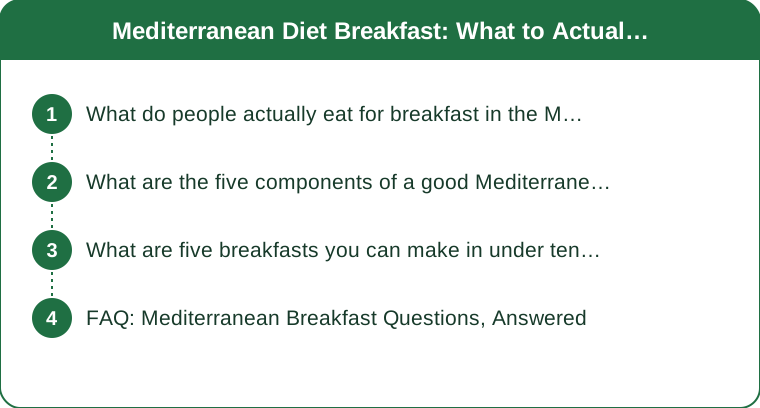
What do people actually eat for breakfast in the Mediterranean?
Small, savoury, and repetitive — the same handful of things most mornings.
In Spain, pan con tomate: toasted bread rubbed with a cut tomato, drizzled with olive oil, a pinch of salt. With coffee. That is the whole breakfast, and it is eaten by an enormous number of people daily.
In Greece, bread with olive oil and olives, or thick yoghurt with honey and walnuts, or a small savoury pastry. Greek yoghurt in Greece is a breakfast food eaten plain or with honey, not a vehicle for granola.
In Italy, breakfast is famously minimal — coffee, sometimes a small pastry. This is worth naming honestly rather than pretending otherwise, because the Mediterranean diet as studied is a pattern across the day, not a rule that every meal must be exemplary.
In Turkey and the Levant, breakfast is the largest and most varied meal: cheese, olives, tomato, cucumber, eggs, bread, on a weekend at least.
The common thread across all of it: whole grains rather than refined cereal, olive oil rather than butter, savoury rather than sweet, and vegetables present at breakfast — which is the habit that surprises people most and is arguably the single most useful thing to copy.
What are the five components of a good Mediterranean breakfast?
Build from these and the specific recipe stops mattering.
A whole grain. Sourdough or wholegrain bread, oats, or a barley rusk. The grain is the base rather than an afterthought, and it is not a refined breakfast cereal.
Olive oil. This is the non-negotiable one. Extra virgin olive oil is the primary fat of the pattern, and breakfast is one of the easiest places to include it — drizzled on bread, over yoghurt with herbs, or over eggs. A tablespoon is a reasonable working amount at breakfast.
A vegetable or fruit. Tomato is the classic, and it pairs with olive oil for a genuine reason: lycopene absorption is substantially improved in the presence of fat. Cucumber, peppers, figs, or berries all work.
A modest protein. Plain Greek yoghurt, an egg, a small piece of feta, or a handful of nuts. Modest is the operative word — this is not a high-protein breakfast pattern and does not need to be.
Something from the nut and seed family. Walnuts and almonds particularly. Walnuts are notable for being one of the few plant sources of alpha-linolenic acid, and a small handful is a standard Greek breakfast addition to yoghurt.

What are five breakfasts you can make in under ten minutes?
All of these are assembly rather than cooking.
1. Tomato toast, the Spanish way. Toast good bread. Halve a ripe tomato and rub the cut side over the toast until only skin is left. Drizzle olive oil generously, salt it, and eat immediately. Two minutes, and the ripeness of the tomato is the entire quality variable.
2. Yoghurt with walnuts and honey. Plain full-fat Greek yoghurt, a small handful of chopped walnuts, a genuine drizzle of honey, and a few berries or a chopped fig. Buy plain and sweeten it yourself — flavoured yoghurts carry far more sugar than most people expect.
3. Overnight oats, savoury or sweet. Oats soaked in milk or yoghurt overnight with chopped nuts and fruit. The savoury version — oats with olive oil, herbs, and a soft egg on top — is genuinely good and almost nobody tries it.
4. Bread, feta, olives, tomato, cucumber. The Levantine plate, scaled down to a weekday. Nothing is cooked and it takes three minutes. A drizzle of olive oil and dried oregano over the feta makes it.
5. Eggs with tomato and olive oil. Two eggs cooked in olive oil rather than butter, halved cherry tomatoes softened in the same pan, wholegrain toast alongside. Roughly eight minutes and it holds you until lunch better than the others.
What nobody tells you about Mediterranean breakfast: the coffee is part of it. Coffee is consumed widely across the region, usually small, usually without much added, and often as the entire breakfast on a busy morning. If your realistic weekday is coffee and a piece of fruit, that is a great deal closer to the actual pattern than a carefully constructed bowl you will abandon in a fortnight.
FAQ: Mediterranean Breakfast Questions, Answered
Can I eat eggs every day on a Mediterranean diet?
Eggs appear regularly in the pattern, though typically a few times a week rather than daily, and traditionally in smaller quantities than a modern three-egg breakfast. Current dietary guidance in most countries no longer sets a strict egg limit for the general population. If you enjoy them, cooking them in olive oil rather than butter and serving them with vegetables keeps them firmly within the pattern.
Is cereal ever acceptable?
Plain oats, yes — they are a whole grain and porridge is a reasonable fit. Boxed breakfast cereal is not part of the pattern, largely because it is refined and sweetened. If you like the convenience, overnight oats give you the same speed with none of the problem.
Do I need to give up coffee or add anything to it?
No. Coffee is standard across the Mediterranean and there is no requirement to modify it. The relevant question is what goes in it — the pattern favours it black or with a small amount of milk, rather than as a sugar-heavy drink.
Is skipping breakfast against the diet?
Not at all. The Mediterranean diet is a pattern of what you eat, not a schedule of when. Many people in the region eat very little in the morning. If you are not hungry at 7am, coffee and a piece of fruit is a perfectly legitimate version.
TL;DR:
- Real Mediterranean breakfasts are small, savoury, repetitive, and built on bread or oats with olive oil.
- Build from five components: whole grain, olive oil, a vegetable or fruit, modest protein, and nuts or seeds.
- Tomato with olive oil is the archetype, and the fat genuinely improves lycopene absorption.
- Five fast options: tomato toast, yoghurt with walnuts and honey, overnight oats, a feta and olive plate, and eggs cooked in olive oil.
- Buy plain yoghurt and sweeten it yourself; skip boxed cereal; and skipping breakfast entirely is not a violation of anything.
Keep Reading
This article is for general informational purposes only and is not medical advice. Always consult a qualified health professional for guidance specific to you.