Mediterranean Diet Breakfast: 12 Real Ideas and the Shopping List Behind Them
Quick Answer: A Mediterranean diet breakfast is built on whole grains, olive oil, vegetables, and a protein source that is usually yogurt, eggs, or legumes — not cereal and not a smoothie. The most common weekday versions are Greek yogurt with nuts and fruit, whole-grain toast with olive oil and tomato, or eggs with vegetables and beans. The shopping list is short: olive oil, plain Greek yogurt, eggs, whole-grain bread, tomatoes, cucumbers, olives, nuts, and fruit.
Most Mediterranean diet guides describe lunch and dinner beautifully and then leave breakfast as a vague instruction to eat whole grains.
Here is what people around the Mediterranean actually eat in the morning, and the twelve versions that survive a real weekday.

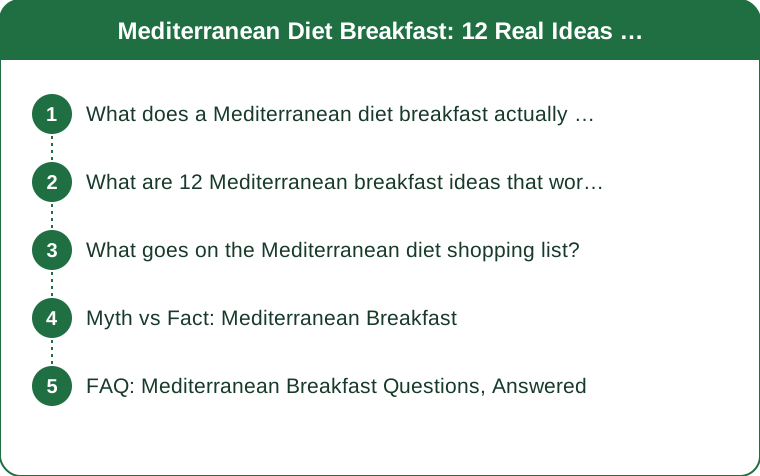
What does a Mediterranean diet breakfast actually look like?
Simpler and more savory than the American version of the idea.
Savory is the norm, not the exception. In Greece, Spain, Turkey, and southern Italy, the standard breakfast includes vegetables, olives, cheese, or eggs. Sweetness comes from fruit rather than from added sugar, and the concept of a sweetened breakfast cereal is largely absent.
Olive oil appears at breakfast, not just at dinner. Bread with olive oil and tomato is a genuine everyday breakfast across Spain and Italy. It is not a health-food adaptation — it is what people eat.
The protein is dairy, eggs, or legumes. Greek yogurt, feta, eggs, and dishes built on beans or chickpeas cover most mornings. Processed breakfast meats are rare.
Portions are moderate and coffee is real. A small, strong coffee, a modest plate, and no attempt to front-load half the day’s calories.
What is usually missing from American versions: vegetables. If your Mediterranean breakfast has no vegetable in it, it is probably just a healthy breakfast — which is fine, but it is not the pattern that the research is describing.
What are 12 Mediterranean breakfast ideas that work on a weekday?
Four that take under five minutes, four that take about ten, four for the weekend.
Under five minutes:
- Greek yogurt, walnuts, honey, and whatever fruit is in season — figs and grapes in late summer, apples and pears as fall arrives.
- Whole-grain toast rubbed with a cut tomato, olive oil, and salt. The Catalan classic, and it is a two-minute breakfast.
- Toast with mashed white beans, olive oil, and lemon. More protein than it looks.
- Yogurt bowl with cucumber, olive oil, dill, and a pinch of salt — savory yogurt, which is the version most Americans have never tried.
About ten minutes: 5. Two eggs scrambled with spinach and feta. 6. Shakshuka-style eggs poached in canned tomatoes with cumin and peppers. 7. Chickpeas warmed in olive oil with garlic and lemon, over toast or yogurt. 8. An omelet with leftover roasted vegetables from last night.
Weekend versions: 9. A full mezze plate: olives, feta, tomatoes, cucumber, boiled egg, bread, olive oil. 10. Baked feta with tomatoes and oregano, eaten with bread. 11. Savory oats cooked in broth with olive oil and a soft egg. 12. Whole-grain pancakes with yogurt and fruit instead of syrup, for the household that needs a pancake.

What goes on the Mediterranean diet shopping list?
Shorter than most people expect. Build the pantry once and breakfast stops requiring decisions.
Buy every week: plain Greek yogurt, eggs, tomatoes, cucumbers, lemons, fresh fruit in season, leafy greens, fresh herbs (parsley, dill, or mint).
Buy every few weeks: good olive oil, whole-grain bread (freeze half the loaf), feta, olives, walnuts and almonds, canned chickpeas and white beans, canned tomatoes, oats.
Buy once and forget: dried oregano, cumin, red pepper flakes, honey, red wine vinegar, tahini.
Skip: breakfast cereals, flavored yogurts, breakfast meats, juice, and anything marketed as a Mediterranean-diet product. The pattern is made of groceries, not products.
Budget note: the expensive items on this list are olive oil and nuts, and both are used in small quantities per meal. A litre of decent olive oil covers roughly a month of daily breakfasts. Everything else on the weekly list is inexpensive produce and dairy.
Myth vs Fact: Mediterranean Breakfast
Myth: A Mediterranean breakfast has to include bread. Fact: Yogurt-based and egg-based breakfasts are equally traditional. Bread is common but not required, and whole-grain versions matter more than the presence of bread itself.
Myth: Olive oil at breakfast is too heavy. Fact: A tablespoon of olive oil is about 120 calories and it substantially increases how full you feel by mid-morning. It is one of the most useful additions to a breakfast that otherwise leaves you hungry at ten.
Myth: You need to eat fish for breakfast to be authentic. Fact: Fish is a lunch and dinner food across most of the Mediterranean. Sardines on toast is a fine breakfast, but it is not the standard one, and nobody is failing the diet by skipping it.
Myth: Smoothies are a good Mediterranean breakfast. Fact: Blended fruit drinks are not part of the traditional pattern at all, and they tend to deliver a lot of sugar with very little protein or fat. A yogurt bowl with the same fruit does more for satiety — this one surprises people who assumed anything fruit-based qualified.
Myth: Greek yogurt and regular yogurt are interchangeable here. Fact: Strained yogurt has roughly double the protein of unstrained at the same volume, which is most of why it holds you until lunch. If you use regular yogurt, expect to add nuts or eggs to make up the difference.
FAQ: Mediterranean Breakfast Questions, Answered
Can I have coffee on the Mediterranean diet?
Yes — coffee is deeply embedded in Mediterranean daily life, typically small, strong, and without large amounts of added sugar or flavored syrup. Milk is fine. What does not fit the pattern is a 20-ounce sweetened coffee drink standing in for breakfast.
Is oatmeal Mediterranean?
Oats are not traditional to the region, but whole grains absolutely are, and oatmeal fits the pattern well if you treat it accordingly: cooked in water or milk, topped with nuts, fruit, and a little olive oil or yogurt rather than brown sugar. Savory oats with an egg is closer to the spirit of the diet than a sweetened bowl.
What if I do not eat breakfast at all?
That is compatible. Skipping breakfast is common in parts of the Mediterranean, where a small coffee in the morning and a substantial midday meal is the norm. The pattern is about what you eat across the week rather than mandating a morning meal — if you are not hungry at 7am, a good lunch matters more than forcing a plate.
TL;DR:
- Mediterranean breakfast is savory more often than sweet: vegetables, olive oil, yogurt, eggs, whole grains.
- Twelve workable options above, four of which take under five minutes.
- The shopping list is short — olive oil, Greek yogurt, eggs, whole-grain bread, tomatoes, cucumbers, olives, nuts, fruit.
- Add a tablespoon of olive oil and a real protein source, and the mid-morning hunger problem largely disappears. Start with the yogurt bowl and the tomato toast. Those two cover most weekdays, and once the pantry list is stocked, the other ten stop requiring any planning at all.
Keep Reading
This article is for general informational purposes only and is not medical advice. Always consult a qualified health professional for guidance specific to you.