Is the Mediterranean Diet Actually Affordable, or Just for People With Money?
Quick Answer: The Mediterranean diet’s core — beans, whole grains, seasonal vegetables, and modest amounts of olive oil — is genuinely budget-friendly. The expensive reputation comes mostly from premium extras (imported specialty products, daily fresh fish) that aren’t actually required by the diet’s core structure.
Every Mediterranean diet article seems to feature imported olive oil and fresh-caught fish, giving the whole approach a premium-grocery-store price tag. But strip away the styling and look at what the diet’s actual evidence-based structure requires, and the cost picture changes considerably.

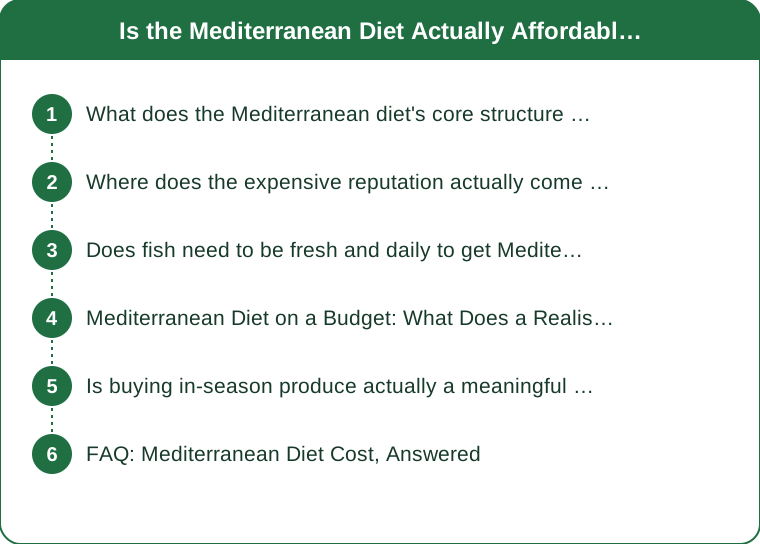
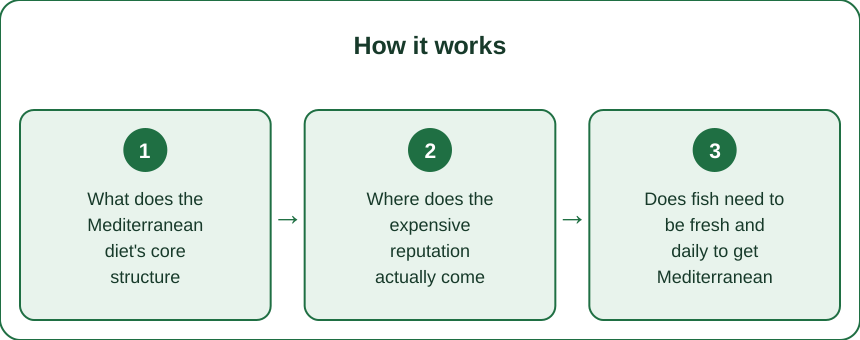
What does the Mediterranean diet’s core structure actually require?
The evidence-based foundation is legumes, whole grains, vegetables, fruit, nuts, and olive oil as the primary fat, with fish and poultry a few times a week and red meat sparingly. Beans, lentils, chickpeas, oats, and seasonal produce are among the least expensive foods per calorie and per gram of protein available at most grocery stores — the diet’s actual backbone is budget-friendly by nature, not despite appearances.
Where does the expensive reputation actually come from?
Mostly from media styling and premium product marketing, not the diet’s real requirements. Imported extra-virgin olive oil, wild-caught fish daily, and specialty items marketed as ‘Mediterranean’ carry premium price tags, but none of these specific products are required — a domestic olive oil and canned or frozen fish deliver comparable nutritional benefit to their pricier counterparts for a fraction of the cost.
Does fish need to be fresh and daily to get Mediterranean diet benefits?
No — canned sardines, canned salmon, and frozen fish fillets retain most of the relevant nutritional profile (omega-3s, lean protein) that fresh fish provides, at a significantly lower price point. Most Mediterranean diet research also recommends fish just 2-3 times weekly, not daily, which further reduces the actual cost commonly assumed.

Mediterranean Diet on a Budget: What Does a Realistic Grocery List Look Like?
A cost-conscious version leans on: dried or canned beans and lentils, oats, brown rice, frozen mixed vegetables, seasonal fresh produce, canned fish, eggs, and a mid-range olive oil — every item on this list is available at most standard grocery stores at accessible prices, and several (dried beans, oats, frozen vegetables) are among the cheapest calorie sources in the entire store.
Is buying in-season produce actually a meaningful cost lever?
Yes, significantly. Out-of-season fresh produce carries a real price premium for import and storage costs, while in-season produce is often dramatically cheaper and higher quality. Building a Mediterranean-style plate around whatever produce is currently in season, rather than a fixed shopping list, is one of the most effective ways to keep the approach affordable year-round.
FAQ: Mediterranean Diet Cost, Answered
Do you need extra-virgin olive oil specifically, or does any olive oil work?
Regular olive oil provides similar core fatty acid benefits at a lower price than extra-virgin; EVO has more antioxidant compounds from less processing, but it’s not a requirement to get the diet’s primary benefits.
Is canned fish nutritionally comparable to fresh?
Yes, largely — canned sardines and salmon retain most of their omega-3 content and protein, and are often more affordable and shelf-stable than fresh alternatives.
Are Mediterranean diet supplements or specialty products necessary?
No — the diet’s evidence base comes from whole-food eating patterns, not specific branded products; skip the specialty aisle and build from the basic grocery list instead.
TL;DR:
- The diet’s actual core (beans, grains, produce, olive oil) is inexpensive by nature
- The expensive reputation mostly comes from optional premium products, not requirements
- Canned or frozen fish delivers similar benefits to fresh at a much lower cost
- Buying in-season produce is one of the biggest cost-saving levers available
The Mediterranean diet’s price tag is mostly a marketing illusion — its real backbone is some of the cheapest, most accessible food in the store.
Keep Reading
This article is for general informational purposes only and is not medical advice. Always consult a qualified health professional for guidance specific to you.